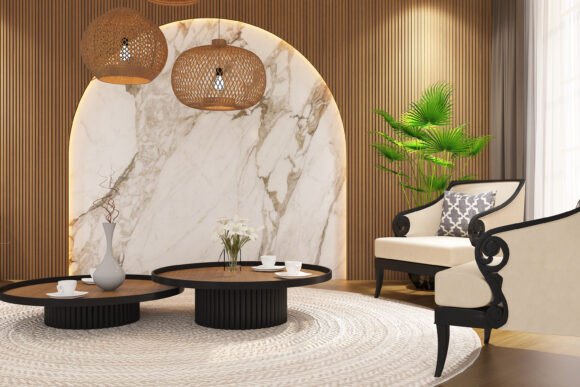
3D Render of Living Room 5
3D render of living room 5 is a digital visualization that brings a space to life before it's built. It allows designers, homeowners, and creators to see how a living room might look with specific elements like arc fluted wood paneling, wood parquet flooring, and a gray wall finish. This tool is especially useful for planning and presenting ideas in a clear, realistic way.
Why 3D Renders Matter for Different Audiences
Whether you're an interior designer, a homeowner, or a business owner, 3D renders offer unique value. For beginners, they can help visualize design concepts without the need for physical materials. For professionals, they serve as a powerful communication tool with clients. For educators, they provide a visual aid to teach design principles. Each group may approach 3D rendering differently based on their goals and needs.
How Beginners Can Benefit
If you're new to interior design, 3D render of living room 5 can be a great starting point. It helps you experiment with different layouts, color schemes, and furniture placements without making costly mistakes. You can try out various combinations of elements like a round carpet, hanging light, or white decorative ceiling to see what works best for your space.
For example, a beginner might use a 3D render to test how a minimalist tropical style affects the overall feel of a room. They can adjust the placement of windows, the texture of wood panels, or the lighting to get a sense of the final result before committing to any real changes.
What Professionals Look for in 3D Renders
Experienced designers and architects often prioritize quality and realism when using 3D renders. They want to ensure that every detail, from the grain of the wood parquet floor to the soft glow of a hanging light, is accurately represented. For them, 3D render of living room 5 isn't just about aesthetics—it's about functionality and client satisfaction.
A professional might use this tool to showcase a project to a client, allowing them to walk through the space virtually. This can save time and reduce misunderstandings, as the client can see exactly what the final design will look like.
How Educators Use 3D Renders
Teachers and trainers in design or architecture programs often use 3D renders to illustrate concepts in a more engaging way. By showing students a 3D render of a living room with specific elements, educators can explain design principles such as balance, proportion, and spatial flow more effectively.
For instance, a teacher might use a 3D render of a minimal tropical interior to demonstrate how natural materials and open spaces can create a calming atmosphere. Students can then analyze the choices made in the render and discuss how they might apply similar techniques in their own work.
Business Owners and Marketing Teams
For small business owners or marketing teams, 3D renders can be a valuable asset in promoting a product or service. A real estate agent might use a 3D render of a living room to give potential buyers a virtual tour of a property. A furniture company could showcase their products in a 3D-rendered space to highlight how their items fit into a modern home.
In this context, the focus is often on presentation and impact. A well-crafted 3D render can make a strong impression and help businesses stand out in a competitive market.
Consumers and Homeowners
Homeowners looking to renovate or redecorate can benefit from 3D renders by getting a clear idea of how their space will look after the changes. This is especially helpful when choosing between different design options, such as a gray wall finish versus a lighter tone, or a round carpet versus a rectangular one.
For example, someone interested in a tropical interior might use a 3D render to see how arc fluted wood panels and large windows can bring a sense of openness and natural light into their living room. This allows them to make informed decisions before making any purchases or hiring contractors.
Key Considerations When Using 3D Renders
When evaluating 3D renders, different people may have different priorities. Some may care more about ease of use, while others focus on speed, reliability, or creative flexibility. Understanding these factors can help you choose the right tools and resources for your needs.
Ease of Use
For beginners or hobbyists, the user-friendliness of a 3D rendering tool is crucial. A complex software with a steep learning curve might not be ideal if you're just starting out. Instead, opt for platforms that offer intuitive interfaces and pre-designed templates, such as a 3D render of a living room with windows and other standard elements.
Cost and Value
Cost is another important factor. Some 3D rendering tools come with a price tag, while others are free or available through subscription models. Business owners and professionals may invest in premium software for better quality and features, while casual users might prefer more affordable options that still deliver good results.
Quality and Realism
For those who rely on 3D renders for presentations or client work, the quality of the output matters. High-resolution images, accurate lighting effects, and detailed textures can make a significant difference in how the final design is perceived. A 3D render of a living room with a white decorative ceiling and arc fluted wood paneling should reflect these details clearly.
Flexibility and Customization
Some users may prioritize the ability to customize a 3D render. Whether you're adjusting the position of a hanging light or changing the color of the walls, having control over the design elements can enhance the usefulness of the tool. This is particularly important for creators and designers who want to experiment with different styles and configurations.
Choosing the Right 3D Render for Your Needs
Ultimately, the value of 3D render of living room 5 depends on how well it aligns with your goals. If you're a student, you might look for a render that highlights design principles. If you're a homeowner, you might focus on practicality and aesthetics. And if you're a professional, you may prioritize realism and presentation quality.
Take the time to explore different options and consider what aspects matter most to you. Whether you're planning a renovation, teaching a class, or showcasing a product, a well-crafted 3D render can be a powerful tool in your arsenal.